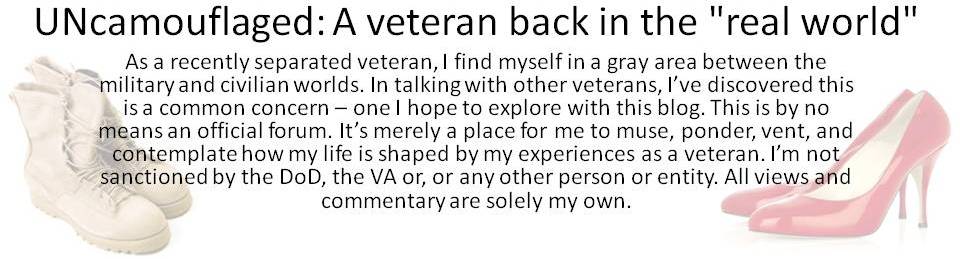
Showing posts with label therapy. Show all posts

Wednesday, September 18, 2013

Welcome, Veteran Poster Boy: Aaron Alexis

I should be polishing the essay I turn in to my workshop class tomorrow, or starting the research paper due next month, or chipping away at that looming thesis project. But sometimes there’s something that needs to be written before anything else can be. Today, that something revolves around Monday’s shooting at the Washington, DC Navy Yard. 

It’s been a violent week. Last weekend, three separate shootings rocked my home city of Boston. The Navy Yard incident, though farther from home, hit me hardest. Not because of the scale—though how can you not balk at the gruesome facts: at least 12 killed and eight injured in the “single worst loss of life in the District” since a Boeing 737 crashed into the Potomac River in 1982, killing 78 people.

No, the Navy Yard shooting hit me hardest because the shooter was a veteran. 

Aaron Alexis, the new veteran
Poster Boy
UNCREDITED/AP
That makes it personal. That adds Aaron Alexis to a list of high-profile poster boys who represent what the public knows to be a veteran. He’s in the company of Army Staff Sergeant Robert Bales, who recently pleaded guilty to killing 16 Afghan villagers in March 2012; Iraq veteran Benjamin Colton Barnes, who shot and killed a park ranger at Mt. Rainier National Park almost exactly a year ago; and Army veteran Wade Michael Page, who fatally shot six people at a Sikh temple in Wisconsin in August 2012.

Of course, any shooting death is tragic. But a perpetrator with military connections makes it doubly tragic for the veteran community. Cue the ripple effects of reinforced stereotypes.

Additionally, this situation is hard for me because I know that as a veteran, Alexis had access to a support network.

The military and VA certainly don’t lack for negative press, especially in light of shocking statistics like in 2012, the number of military suicides was higher than the number of American soldiers killed in Afghanistan. Still, the military community comes with an inherent support network that includes not only official mental healthcare channels, but also chaplains, family support centers, supervisors who are trained and charged with their soldiers’ well-being, and, of course, peers who have “been there, done that.” So many resources—if Alexis had reached out to one, could this tragedy have been prevented?

And is it really that simple? Of course not.

Seeking help requires a degree of self-awareness and an emotional vulnerability that goes against military culture and training.

The military thrives on an ethos of hyper-masculinity. In war, you can’t afford to be emotional. I am by nature one of the most emotional people I know (I still have to fast-forward through Mufasa’s death scene), but in Afghanistan, out of necessity (and somewhat unwittingly), I built barriers around my emotions. It was a defense mechanism that enabled me to do my job—one which keeps war-fighters focused and alive.

But emotional dullness doesn’t translate back to “real life.” I recognized that on some level—that’s what spurred me through the doors of my base’s Mental Health Clinic when everything in me wanted to turn around. My military mentality told me I was weak. A failure.

In hindsight, I realize that incredibly difficult, controversial decision was one of the most important choices I’ve ever made. But can a veteran be faulted for not making it? Is there an element of institutional failure as well?

Right now, the details of Alexis’ military career are sketchy. There's no information on whether he deployed. Reports say that during his service as a Navy reservist he had a “pattern of misconduct” but ultimately received an honorable discharge. The New York Times also reports that Alexis “exhibited signs of mental illness” for many years. 

Surely, there were people who interacted with Alexis and noticed red flags. Surely some such interactions occurred during his time in the service.

In response to the shocking suicide rates, the military has become, in theory, hyper-aware of mental health issues. One of my annual Air Force training requirements was a lengthy Suicide Prevention presentation that was so cheesy and mind-numbing that we all joked it made us want to commit suicide. Each unit took “training days” to discuss our individual and group concerns. We filled out questionnaires about our mental health. We were given flyers with a hotline number.


Mental health was a hot topic for discussion, but too easily clashed with the aforementioned culture in practice. A change in culture starts at the top, and takes more than handouts and PowerPoint. And ultimately, each person is responsible for his or her own sphere of influence. How many paths did Alexis cross where he could have been turned? How many people were too busy, too distracted, too disinterested, too self-absorbed, too scared, too lenient to act?

As a 2nd Lieutenant, my second year in the Air Force, I got a call in the middle of the night that one of my Airmen had been put on suicide watch. The Airman was someone I directly supervised, someone I interacted with on a daily basis, someone I was responsible for. I had failed. It can be so easy—and so terribly costly—to fail.

I could never justify or rationalize the killing of innocent people. I’m not making excuses for Alexis’ actions. I imagine there are a million factors that combine to make a person commit a violent act. And I imagine that no matter how strict our gun laws or how strong a person’s support network, if someone is dead-set on committing violence, he or she will find a way to do so.

I can only hope that in the wake of this tragedy, we can all take stock of our potential for failure—as individuals, as institutions, as a society—and be hyper-aware in practice of prevention.

Monday, June 25, 2012

The limits of “therapy”: Some writing on not writing


I left the Air Force, I moved across the country, I enrolled in grad school, I started a blog to write about war. But I never said writing about war was easy.

I said it was therapeutic. And it was. Until it wasn’t.

I can’t pinpoint exactly when that shift occurred – I think it’s been shifting for a while – but it manifested itself in a very unattractive emotional breakdown last week. In the midst of my crying/nose blowing/self-pitying incoherent sob-infused mumbling, I had an epiphany: writing about painful experiences is painful.

Okay, that wasn’t really an epiphany… it’s pretty self-explanatory: Writing a personal account of a traumatic event means reliving, re-engaging, re-imagining said event. Of course it sucks! But writing also means processing, intellectualizing, making peace with the event, essentially ripping off the Band-Aid and exposing the raw wound so it can be treated properly. So you can heal.

Writing is proven effective in promoting healing after trauma – proven through my personal experiences and through legitimate scientific and psychological research. Cognitive Processing Therapy, one of the main methods currently being used to treat PTSD in military veterans uses writing as a key component; it’s a direct antidote to the PTSD tendency of “avoiding people or experiences that remind you of an event.” (My boyfriend, Colin, chronicles his personal experiences with Cognitive Processing Therapy in a blog series for Copaiba.org)

What I realized, though, as I writhed on the floor of my boyfriend’s car (seriously), is that there’s a limit to how much healing can take place within the delicate balance of reimagining and intellectualizing. Too much of the former too soon following the event, or within too short of a timeframe, and the brain can’t progress to the latter.

Looking back, I think I tipped the scale during my final assignment last semester. I wrote a piece about my first experience with death in the military; a friend was killed when the aircraft he was piloting crashed in Afghanistan. Understandably, it was a hard piece to write. But the event had been gnawing at me . . . I knew I had to process it, and writing was the best way I knew how. It was painful, but I had a deadline, so I gutted it out, vomited everything up on paper. As happens with vomit, the result was a bit messy.

Armed with feedback from my class, a few weeks ago, I set out to clean up the mess. But I couldn’t. Literally. Not only could I not write any more about the event, I couldn’t even think about writing without feeling physically ill. When I wasn’t feeling ill, I was feeling terrified because I was reminded of the last time my psyche forced me to stop writing – In Afghanistan, when I slipped into my own version of the Dark Ages and wasn’t sure I’d ever find my way out.

The emotional breakdown came later, when the same ill feeling crept into other efforts at other pieces. From there it was a short leap to doubting the validity of my future plans, cursing my lack of focus/motivation/organizational skills, the malicious cycle of getting upset over getting upset, dubbing myself a failure, writhing on the floor of my boyfriend’s car.

They say if life gives you lemons, make lemonade. But what if you don’t like lemonade? What if you’re allergic? What if you can only drink small doses and life just so happens to give you a crapload of  lemons?

Maybe I need to wait for my lemons to ripen a bit (though patience has never been my strong suit). Maybe I should just throw some away, try some apples instead.

Maybe I shouldn’t be mixing school (or indeed, my future livelihood) with “therapy.” Maybe I shouldn’t put so much pressure on myself to be productive (and gag the inner voice that keeps telling me it’s the whole reason I’m here!). Maybe I need to stop defining productivity in terms of numbers of pages – and numbers of pages that directly apply to my now very scattered and incoherent thesis project idea (see previous parenthetical).

Maybe I should forget about maybes and what ifs, have a glass of wine and go to bed.

If it was that easy – if anything was – this blog would be pretty lame. 

Sunday, May 6, 2012

PTSD: The new four-letter word


The acronym is familiar to me, as it is to anyone who has access to mass media in the western world and can read, watch and listen to how it’s “breaking” young men and women returning from military deployments. It’s familiar to me as a veteran, who has known and worked with many whose records bear those letters. I witness every day how it colors the words and actions of someone I love.

But recently, PTSD hit me in a new way.

As of last week, I’m donating my body to science. (Incrementally, by way of Veterans Affairs research studies.) My initial study is investigating brain functioning in veterans with diagnosed stress disorders and/or traumatic brain injury. I spent a day clicking blinking computer boxes, memorizing words and pictures, and counting backwards by threes (by FAR the hardest!). The study also involved a lengthy psychological evaluation. As I prepared for that section, I settled into my chair, ready to rehash what I’ve been discussing with social workers, psychologists, and my unwitting creative writing classes for the last two years.

I talked. The psychologist nodded, scribbling notes onto a series of pages. She prompted me, I kept talking. Then there were no more pages and I had nothing left to say, and, flipping back through her notebook, the psychologist said, “Well, you’re definitely still exhibiting symptoms of low-grade PTSD.”

???????

This was not something I’d been told by the previous social workers or psychologists. This is not the diagnosis reflected in my VA disability rating, which proclaims me a sufferer of Chronic Adjustment Disorder . . . Is that the same thing?

“No,” the psychologist clarified, “they’re definitely different. What I get from you is definitely PTSD.”

Definitely PTSD. Not an official diagnosis, really. An opinion rendered in a non-treatment capacity, one of many professional opinions I’ve received. The outlier. But hearing those letters with my name brought an onslaught of emotions:

Affirmation – so that’s why I feel and act the way I do. Maybe I’m justified, after all. (Followed quickly by . . .)

Guilt – what right do I have to be linked with PTSD? I, who spent most of my deployment behind a desk, who was never shot at, who never shot at anyone, who was never blown up, who made it home safely with my entire unit. So many horrible things I didn’t experience. How can I be associated with veterans who did?

Weakness – maybe I am linked with those who suffered more, and because I suffered less but had a similar reaction, that makes me weak. They say everyone has a breaking point, maybe mine came sooner than most. Maybe I was never meant to be a soldier.

Fear – if I do have PTSD, what does that mean? There are so many things that scare me about that acronym, about the complication, the destruction it can leave in its wake.

More guilt – how can I fear the things in others that I myself embody?

Ultimately, I know I’ll be okay. I know I’ve come a long way in the two years I’ve been back from Afghanistan. In many ways, I think I’m stronger. I know I’m stronger. Those four letters are merely scribbled in a research notebook. They hung in the air for a moment over a table in a VA testing room, then disappeared.

But they seeped into my consciousness, where they’ve been gnawing at me, making me think about how we view PTSD as a society – something that has colored my perspective more than I’d like to admit.

Despite living on the fringes, I don’t understand PTSD. Most people don't. My boyfriend, Colin, had been lecturing on PTSD for a couple years before he was officially diagnosed. When we started dating, I was hesitant to get involved because of those four letters. Conversely, I was convicted by my fear. If anyone can understand a veteran’s emotional state, shouldn’t it be a fellow veteran?

PTSD is scary because it is unknown. Until recently, no one talked about it; military mental health care has always been shrouded in stigma. Now, it seems, as soon as the military is beginning to acknowledge the inevitable mental and emotional affects of war, the issue is being sensationalized outside the military, and veterans are stigmatized by the civilian community.

Lack of knowledge breeds misrepresentation and misunderstanding – two things the media is famous for propagating.

In the latest example, on April 19, “Dr.” Phil (quotations added), aired a show titled “PTSD Takes Veterans from Heroes to Monsters.” As if the title weren’t enough, it came with this melodramatic ad. Following heated response from the veteran community, the show’s name was changed to “Heroes in Pain,” post-broadcast. But the message was already out. As they stressed in public affairs training, the initial message is the one that sticks.

Before Dr. Phil’s show, military mental health advocacy faced another hurdle when U.S. Army Staff Sgt. Robert Bales became the new face of modern warfare after allegedly massacred 17 civilians in southern Afghanistan. For many, Sergeant Bales has come to represent this generation of veterans: broken, unstable, a hopeless tragedy.

Veteran unemployment continues at an unprecedented rate. There is no denying the PTSD stigma plays a role. In the minds of employers, the “impressive military resume” we were all promised upon enlistment is being weighed against an imagined mental health resume.

No one wants to hire a Sgt. Bales. No one wants to associate with the likes of those profiled on Dr. Phil: the drug addict, the husband who beats his wife, the one who set his wife on fire.

To Dr. Phil’s audience, I’m Frankenstein.

To civilian employers, I’m a loose cannon.

To the VA, I’m damaged goods.

Amidst these messages, how am I supposed to view myself? How are veterans dealing with the emotional scars of war supposed to respond to military messages encouraging them to seek help when seeking help might lead to a diagnosis, and a diagnosis might lead to labels and disenfranchisement?

A new debate, discussed in this article, questions whether a name change would help alleviate the stigma around PTSD. Replacing "disorder" with "injury," for example, communicates that healing is possible.

Whatever you call it, the truth is, PTSD can be scary. It can manifest in ways which, when sufferers don’t get needed treatment and therapy, can lead to violent outbursts like the extreme examples above. These examples are hard to ignore when they scream at us from every news broadcast. But they are the exception. There are many more like Colin and me than like Sergeant Bales.   

Mental health will always be an issue in the military. Just as combat is in the job description, emotional and mental strain are among the expected side effects. Mental health is a bigger issue than it needs to be because we either don’t talk about it, or we talk about it in the wrong way. We ignore it, or we sensationalize it.

On either end of the spectrum, the ones who suffer are the veterans. And they have suffered enough. 

Saturday, April 14, 2012

The sound of silence

First, an apology. I’ve been terribly out of touch. It’s not just you; it’s everything. I guess that’s what happens when you’re falling in love . . .

I’ve had a bit of an epiphany in the last couple weeks. It has to do with my last entry. And it has to do with the object of my love-falling, who you may know through blog post infamy. Since I’ll probably be referencing him frequently now, I’ll just go ahead and call him Colin. Because that’s his name.

Anyway, what I’ve realized is I like to talk. I know what you’re thinking: Lauren is loud and obnoxious and always has been! This is true. Or it was . . . until Afghanistan.

Before Afghanistan, I was a pretty gregarious, bubbly person. Probably annoyingly so. I told my parents everything. I told random strangers more than they cared to know about the Air Force. I also wrote about everything – it was my way of chronicling my thoughts and feelings, and, if I was stressed, of shaping my stressors into something tangible, something manageable.

At some point during my deployment, I stopped talking. Not entirely, of course; I don’t think I’m physically equipped to do that. I stopped talking about my feelings. As I got disillusioned and worn down, as my feelings turned more negative, I withheld them because I didn’t want to worry my family back home. On the extreme end of the spectrum – the end you’re often on in war – if I were killed, I didn’t want them to think that I didn’t believe in what I was fighting for.

For similar reasons, I stopped writing. I had been keeping a blog, and I could no longer find non-worry-inducing “spins” for my entries. I ran out of ideas. I ran out of steam.

I ran out of words.

Hello darkness, my old friend

It took me almost a year to find them again. It started with my initial visit to the Mental Health Clinic at my home base, Hurlburt Field, FL. Social workers have a way of getting you to talk, and mine started picking away at my silent veneer. One I began to open up to her, I was able to ease into talking to my parents. I called them once and prayed they weren’t home so I wouldn’t have to tell them that I was hurting. They didn’t answer. I was relieved. I cried myself to sleep. Alone.

The next day, I finally told them. The ball started rolling. Hesitantly, I let it roll to other relatives and friends.

Graduate school applications – a writing portfolio – forced me to find my written words again. They came slowly at first, then stumbling over one another, eager to break out of the dark places they’d been forced to hide.

I've come to talk with you again

When I got to grad school, I was faced with a new hurdle: talking to strangers. And not just any strangers: civilians. I would have kept my mouth shut and my pen capped if I had a choice. But I’d already chosen nonfiction writing. (Awfully silly for someone who doesn’t want to talk about feelings).

I will be eternally grateful for the amazing reception from my classmates and teachers at Emerson. If their response had been different, I might have shut down again. Who knows where I would be now. Silent.

But they were interested in my words. They were appreciative. They were supportive. They wanted to hear more. So I kept talking, kept writing. I started another blog. I got more positive feedback, and it was like oil in my rusty machine.

Because a vision softly creeping

Then I went to Chicago for a writing conference, and met other veterans, including Colin, who like to talk. I was inspired by their openness; I realized I’m part of a veteran writing community that’s gaining traction and getting louder. I added my voice. And my machine got a new engine.

That engine propelled me through my last two blog posts about the March 11 Afghanistan Massacre. The incident hit me with a bombardment of complicated emotions, and instead of burying them, I talked. I wrote.

And I realized that talking is important.

Left its seeds while I was sleeping

After my initial massacre post, I got my first ever angry comment. I’m strangely proud of that – I’m officially a controversial writer! I’m so thrilled to have the opportunity to be controversial, to go against the “party line,” to exercise my First Amendment rights. I think that just might be my favorite amendment.

In a way, every writer aspires to be provocative, to incite thought, conversation, even criticism. To promote understanding. To present a new perspective. Speaking from within a community comprised of less than 1% of the American population (I’m talking about veterans, not Wall Street), these aspects are even more important. As Colin often says, in order for civilians to understand veterans’ experiences, veterans need to start talking. It’s easy to blame civilians for being “ignorant,” but the only cure for ignorance is education, and education can only come from the educated.

Like it or not, it all starts with veterans.

And the vision that was planted in my brain

After my last post, one person told me that this was the first time I’d really dug below the surface without skirting around the issues. I wasn’t conscious of that at the time, but looking back, I agree. Skirting is much more comfortable. And frankly, I’m trained to skirt. In public affairs, I learned how to tap dance around controversial topics, to answer questions in that artful roundabout way that sounds good but doesn’t actually answer anything at all. And like all military members, I learned to, in many situations, keep my mouth shut.

Now, it’s a constant struggle to keep it open. Still – after more than a year in the “civilian world” – I have to continually remind myself that I don’t need to censor my words. When you’re living in a restricted world, you don’t realize how easy it is to internalize the restrictions. (When you’re outside a restricted world, you don’t realize how beautiful your freedom is.)

Still remains

In response to the post, fellow veterans told me about some of their own demons, of their manifestations of the demons I mentioned. They told me about their struggles readjusting to life and their families after deployments. Some have spoken with therapists. Some are reluctant. One called my blog a form of therapy.

There is no more powerful motivation than the thought that my words can reach into dark places within others and help light a spark of healing and understanding.

People called me courageous for being willing to talk, to be controversial. I don’t feel courageous. I feel like I’m doing what I need to do. I have been blessed (cursed?) with a passion – and, I like to hope, a talent – that spurs me to action. It makes me talk. Then talking feels good, and I can’t shut up.

Within the sound of silence

Beware: Before long, I may start screaming.

Because that’s who I am, and that’s what I do. I’m a talker. I’m a writer. I’m a breaker-of-silence. And that’s kind of cool, because the silence needs to be broken.

I just hope people are ready to listen.


“The state of birth, suffering, love, and death are extreme states—extreme, universal, and inescapable. We all know this, but we would rather not know it. The artist is present to correct the delusions to which we fall prey in our attempts to avoid this knowledge.

It is for this reason that all societies have battled with the incorrigible disturber of the peace—the artist.”


~James Baldwin, The Creative Process


Interspersed lyrics from “The Sound of Silence” by Simon & Garfunkel

Monday, December 12, 2011

Why didn't I take the blue pill?!

I have a deck of cards filled with “Would you rather…?” scenarios. The cards ask scintillating questions such as, “Would you rather spend a 24-hour period hearing car alarms in your head –OR– the sound of a dentist’s drill?” and “Would you rather write ‘I am an idiot’ 10,000 times without stopping –OR– suck 75 thick milkshakes through a narrow straw without resting (no need to swallow all the shakes)?”

Here’s a question that’s not in the deck: Imagine you have an injury. Would you rather ignore it and let it heal, but be left with a nasty scar that sometimes spasms unexpectedly with sharp pain –OR– pick off the scab every time it forms, making the wound fresh and raw again, occasionally pouring lemon juice or some other stinging substance into the exposed wound; but thus enabling the wound to heal completely (or as completely as possible, with perhaps some light scarring)?

Back in September when I first started grad school, I chose option 2. I turned in my first workshop piece, 10 pages detailing my initial therapy session after I returned from Afghanistan; all my fears, anxieties, and confusions. All my baggage. I had known my classmates for approximately a day. And I showed them my wounds, let them watch as I ripped off the scabs. I might as well have offered them lemon juice.

As if that wasn’t enough, I did it again and again over the next four months, with two more workshop pieces, two papers, and many candid discussions. Because that’s what personal nonfiction writing is all about; turning yourself inside out, exposing your scars and imperfections in a way that’s honest and (hopefully) resonant.

And when it comes down to it, that’s what healing is about too. Then you patch up the wounds and turn yourself right-side-out again and the scars aren’t quite as visible; like the inside stitching along a seam. If, on the other hand, you ignore those wounds, though it may feel better initially, eventually they begin to fester. There’s a word for that . . . oh yeah, its denial. Usually nothing good comes from that.

I was a bit in denial when I first arrived in Boston for grad school. And I was afraid. Afraid of going “back there;” of digging back into that dark part of my life. Afraid of opening myself up, of the negative response I might receive. Thankfully, I received a tremendously positive response. And in submitting that first piece, I started chipping away at a barrier – a barrier I need to get through to heal, and also to be the writer I want to be.

Writing (or talking) about personal stuff is hard. It’s emotionally draining. When I shut my laptop after an evening of writing I feel emptied out; exhausted with the effort of coaxing images from a closed-off corner of my mind, spinning them into words and pushing them from my head through my muscles and bones – with a long layover at my heart – before they finally patter out into my keyboard.

But it’s also strangely therapeutic. To flush out that corner of my mind. To not be in denial. (They say that’s the first step to recovery, right?) When I see the words on the page they seem tangible. Manageable. Not so overwhelming after all.

And perhaps most significantly, people appreciate that honesty.

Because in order to truly connect with someone, you have to make yourself vulnerable, and you have to trust. That’s something on some level I’ve always known, but struggled to accomplish behind adolescent insecurities. And while there’s a trust in the military – an incredible life and death kind of trust – it’s physical more than emotional. It’s an understatement to say that vulnerability isn’t exactly encouraged in the military.

So grad school represented a bit of an aligning of the planets for me – a time when I needed that connection desperately, when I was in a place where it was offered, and when I was finally mature enough to handle it. My classmates and I bonded over our vulnerability. Sometimes we joke that our classroom discussions are like group therapy. When you’re all inside-out together, no one has reason to be ashamed.

As I look back on my first semester of grad school, that’s the most important lesson I’ve learned.

Here’s some other stuff I learned:
- You can walk pretty much anywhere in Boston. It is not recommended to do so wearing heels or Converse tennis shoes.
- The green line is never on time.
- Crosswalks are merely a suggestion.
- On average, it takes approximately five MFA students approximately 10 minutes to figure out how to divide a restaurant bill. We could write you a dissertation on the quality of the food, but don’t ask us to do math . . .
- Cheetos, Twizzlers and chocolate DO NOT constitute a balanced meal. But they really do help me write papers.
- Writers and cats seem to go hand-in-hand. (An informal poll that I just ran in my head shows a disproportionate number of my classmates have cats. But then again I’m not great at math.)

Thanks to my amazing colleagues at Emerson for your honesty, feedback, support and inspiration. I’m looking forward to working with you for the next 83% of the program! (That math is right, trust me).


Oh, in case you’re curious, I would opt for the dentist’s drill and the milkshakes.

Tuesday, November 8, 2011

THANKS!!!

I just need to take a quick moment to say... WOW! I am so humbled and amazed by the feedback I’ve received from just these three measly blog posts – from veterans saying they can relate, and from non-veterans saying this information is interesting and important (And, yes, even telling me that I’m fascinating. You know what? I’m almost starting to believe it! But don’t worry, I won’t let it go to my head.)

It’s unbelievably wonderful to know that these words are reaching people. When I’m feeling depressed or insecure or suffering from writer’s block, that will keep me going.

Sometimes life throws you down, steps on you and runs away laughing. And it sucks. But then, sometimes, as you’re picking yourself up, dusting yourself off and looking around self-consciously to see if anyone noticed, you realize that in your struggle you inspired someone else. And it still kind of sucks. But it’s also kind of awesome. Maybe it’s all even worthwhile.

Life gave me lemons, and since I’m no good at making lemonade, I’m going to keep writing. I need to for my own sanity. But thank you all for helping it to be so much more than that.